
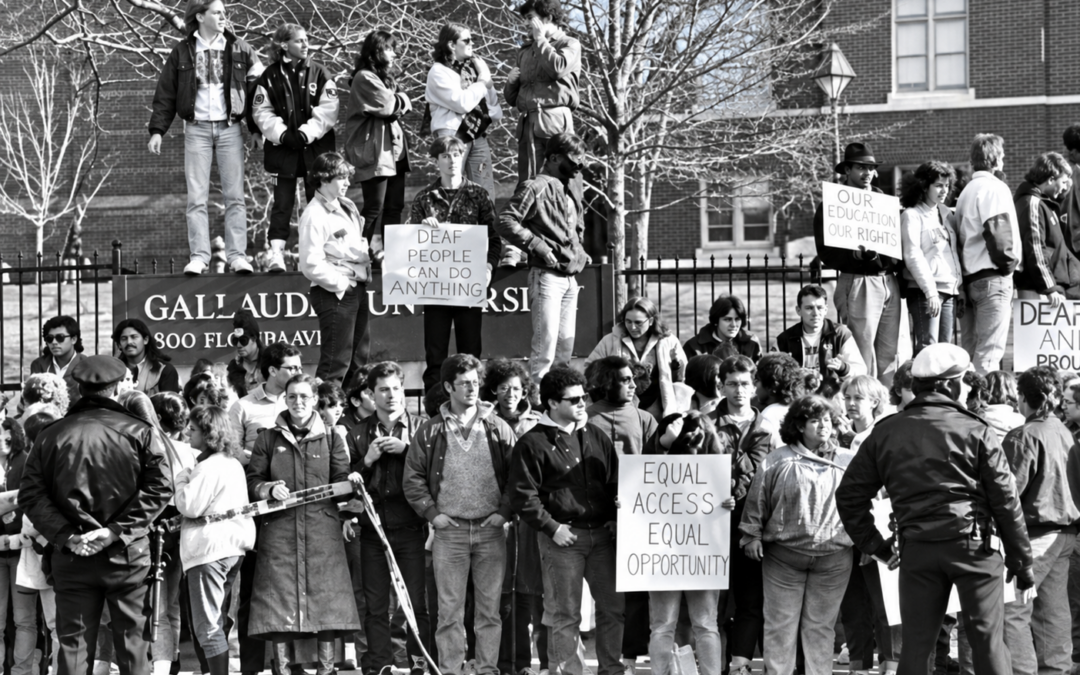
In March 1988, Gallaudet University became the center of a protest that changed history.
What happened on that campus was bigger than one leadership decision. It became a defining moment in Deaf history, a major chapter in the civil rights movement, and a turning point in the fight for Deaf rights. Students were not asking for symbolism. They were demanding something concrete: a Deaf president at the nation’s leading university for Deaf and hard of hearing students.
For years, Deaf students, faculty, and alumni had watched hearing people lead an institution created to serve their community. By 1988, that disconnect was no longer acceptable. When Gallaudet’s Board of Trustees chose a hearing candidate, Dr. Elisabeth Zinser, over two Deaf finalists, the reaction was immediate. The community had made its position clear, and when that message was ignored, the protest began.
The protest quickly became known as Deaf President Now, or the DPN movement. Students marched, organized, shut down the campus, and refused to let the decision stand. Four student leaders — Greg Hlibok, Jerry Covell, Bridgetta Bourne-Firl, and Tim Rarus — became the public face of the movement, but the power behind it came from a much larger group of students, faculty, staff, alumni, and supporters who believed that representation mattered.
The protesters issued four demands:
- the resignation of Elisabeth Zinser and the appointment of a Deaf president
- the resignation of Board Chair Jane Bassett Spilman
- a 51 percent Deaf majority on the board
- no reprisals against students or staff involved in the protest
Those demands were direct for a reason. This was not just about one hiring decision. It was about power, trust, and who gets to lead their own community. It was about refusing the idea that Deaf people should always be represented by someone else. That is why this story still matters.
Too often, Deaf people have been described in terms of limitation. Deaf President Now challenged that idea in public and in full view of the nation. It pushed people to see Deaf culture not as a footnote to hearing life, but as a real community with its own language, leadership, and priorities. It also helped reshape conversations about accessibility, equity, and disability rights in the United States. Gallaudet’s official history describes DPN as a watershed event associated with self-determination and empowerment for deaf and hard of hearing people everywhere.
After a week of sustained protest, the board reversed course. Zinser resigned. Spilman resigned. Dr. I. King Jordan was appointed as Gallaudet’s first Deaf president. That victory was immediate, but its influence kept growing. The movement is often linked to the broader momentum that helped shape the path to the Americans with Disabilities Act. Gallaudet continues to frame DPN as a historic turning point with lasting impact on Deaf leadership and public understanding.
For the Deaf community, the message was unmistakable: Deaf people should not have to wait for permission to lead.
That idea still resonates now — with Deaf leaders, interpreters, educators, families, and hearing allies. This is not only a campus story. It is a story about who gets heard, who gets respected, and who gets trusted with authority. It is also one of the entry points into modern Deaf advocacy.
Dr. I. King Jordan’s most quoted line says it best, “ Deaf people can do anything hearing people can do, except hear.” That line has endured because it names the truth at the heart of the movement. Deaf President Now was never just about a title. It was about visibility, self-determination, and the right to lead.
To dig deeper into the legacy of Deaf President Now and its impact on the ADA, Deaf culture, and Deaf rights, watch the documentary “Deaf President Now!” To watch the documentary, follow this link and sign in to AppleTV or sign up for the free trial.
https://tv.apple.com/us/movie/deaf-president-now/umc.cmc.4db5r1gvgok0a0dtdmkj44ea4

DPN 4 from left to right: Jerry Covell, Bridgetta Bourne, Greg Hlibok, Tim Rarus